

How Baltic Hotels Can Reduce OTA Commission Fees with Direct Bookings
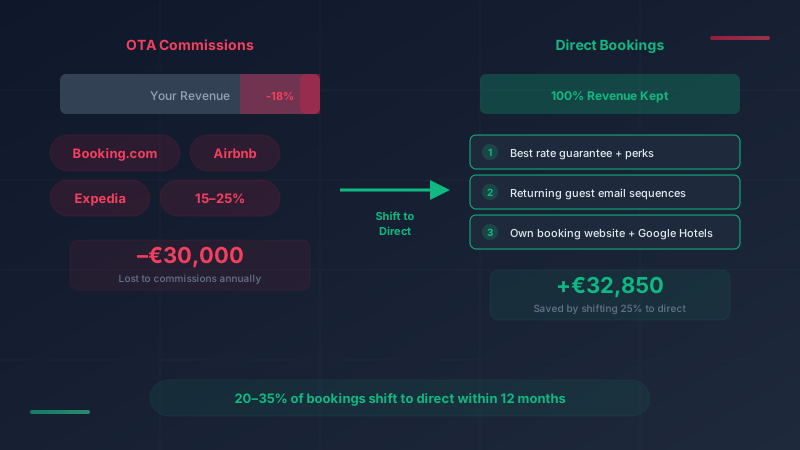
The OTA Commission Problem
Booking.com, Airbnb, and Expedia are essential for visibility — but they come at a cost. Standard OTA commissions range from 15% to 25% per booking. For a Baltic hotel doing €200,000 in annual bookings, that is €30,000–50,000 paid to OTA platforms every year.
The goal is not to abandon OTAs entirely. It is to shift a meaningful portion of bookings to your direct channel where you keep 100% of the revenue.
Why Guests Book Through OTAs
Understanding why guests use OTAs is the first step to redirecting them:
- Convenience — One platform, easy comparison, saved payment details
- Trust — Guests trust established platforms with reviews and guarantees
- Discovery — They find your property through OTA search, not Google
The good news: once a guest has stayed at your property, they have no reason to pay OTA prices for their next visit.
Strategy 1: The Direct Booking Incentive
The most effective tactic is offering a visible reason to book direct.
Best rate guarantee: Display "Best rate guaranteed when booking direct" prominently on your website. OTA contracts often require rate parity, but you can offer value-adds instead:
- Complimentary early check-in or late check-out
- Free parking included (charged extra on OTAs)
- Welcome drink or local product basket
- 5% discount on stays longer than 3 nights
These perks cost you less than the OTA commission while giving guests a compelling reason to book direct.
Strategy 2: Capture Returning Guests
Your highest-value audience is guests who have already stayed. They know and trust your property.
Post-stay email sequence:
- Day 1 after checkout: Thank-you email with a link to your direct booking page
- 6 weeks later: "We'd love to welcome you back" with a returning guest offer
- Seasonally: Newsletter with upcoming availability and exclusive direct-only rates
A simple CRM or even a well-crafted email template can automate this entirely.
Strategy 3: Your Own Booking Website
This is the foundation everything else rests on. An OTA-independent booking experience that converts.
Your direct booking website needs:
- Real-time availability calendar that guests trust (no "call to check availability")
- Mobile-first design — most guests browse on phones
- Transparent pricing with no hidden fees at checkout
- Instant confirmation — guests should not wait 24 hours for a reply
- Multiple languages for Baltic, German, and Russian-speaking guests
- Trust signals — your own reviews, photo gallery, local area guides
Info
Strategy 4: Leverage Google Hotel Search
Google's free hotel listing (via Google Business Profile and Google Hotel Search) puts your direct booking link next to OTA results in search. When a guest searches "guesthouse Sigulda," your direct booking button appears alongside Booking.com.
Setup requires connecting your booking engine to Google's hotel API — something Lindevo configures as part of every booking platform build.
Strategy 5: Ask Guests Directly
Train your staff to mention it. "If you enjoyed your stay, booking directly next time gets you the best rate and helps us keep our prices competitive." Most guests do not realize OTA fees exist — a simple, friendly explanation often works.
The Numbers
A 200-room hotel shifting 25% of OTA bookings to direct at an average rate of €100/night:
- OTA bookings shifted: 1,825 room nights/year (assuming 50% occupancy, currently 25% via OTAs, shifting half)
- Commission saved: 1,825 × €100 × 18% = €32,850/year
That recurring saving pays for a custom booking platform within its first year of operation. Curious what that platform actually costs? See our hotel booking system cost breakdown: build vs buy.
Get Started
Ready to reduce your OTA dependency? Contact Lindevo to discuss a direct booking strategy for your property — from website design to Google Hotel Search integration.
On this page