
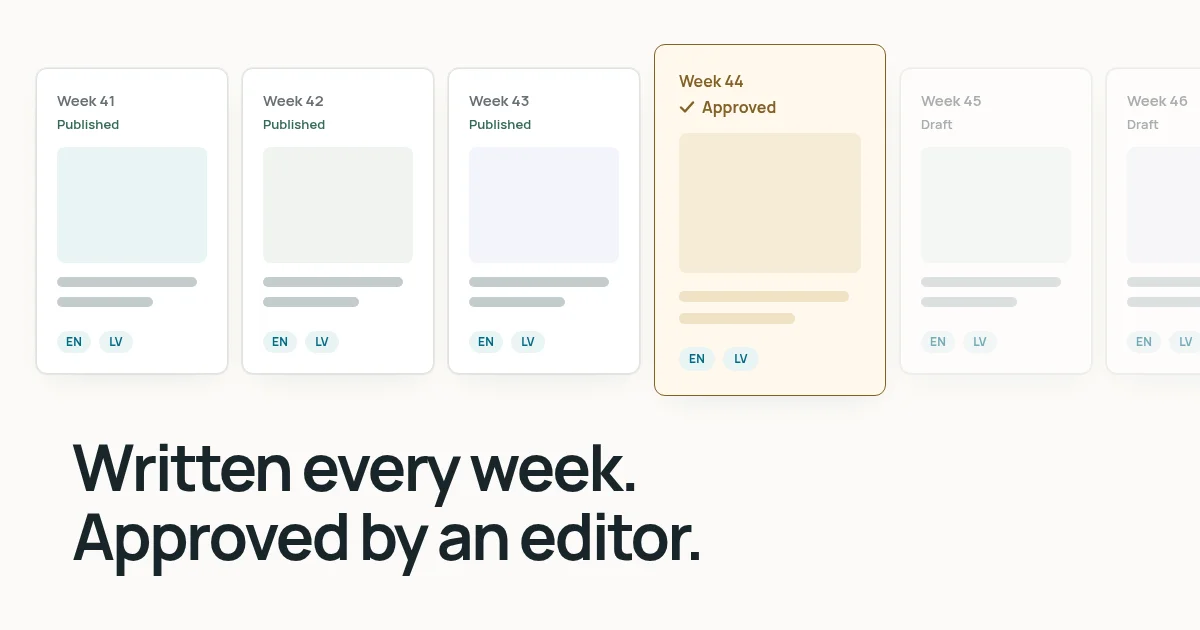
This is the AI content engine behind the Lindevo blog. It finds topics worth writing about, researches them with quotes checked against the source, drafts the article, checks every factual sentence and writes a native Latvian version. A person reads every article and approves it before anything is published. We built it for our own blog, and we can set up one like it for your company.
What it does for us
A good article takes hours of work that looks the same every time: find what people are asking about, read the sources, check the facts, write it, then write it again in a second language. Most of those hours go into preparation, not judgement.
The engine takes the preparation. That changes three things for us:
- The blog keeps a steady rhythm. Topics, research and drafts arrive on schedule, in English and Latvian, without a full-time writer.
- The reviewer's time goes to judgement. Reading a checked draft with its sources beside it takes far less effort than writing from a blank page.
- Mistakes are caught before a person sees the draft. Unsupported claims, broken links and copied passages go back for revision automatically.
It is also our own test bed. When a check catches a problem here, we learn something we use in client work.
How the AI content engine works
Click through the six steps an article goes through. The screens are simplified illustrations with example data.
Trigger
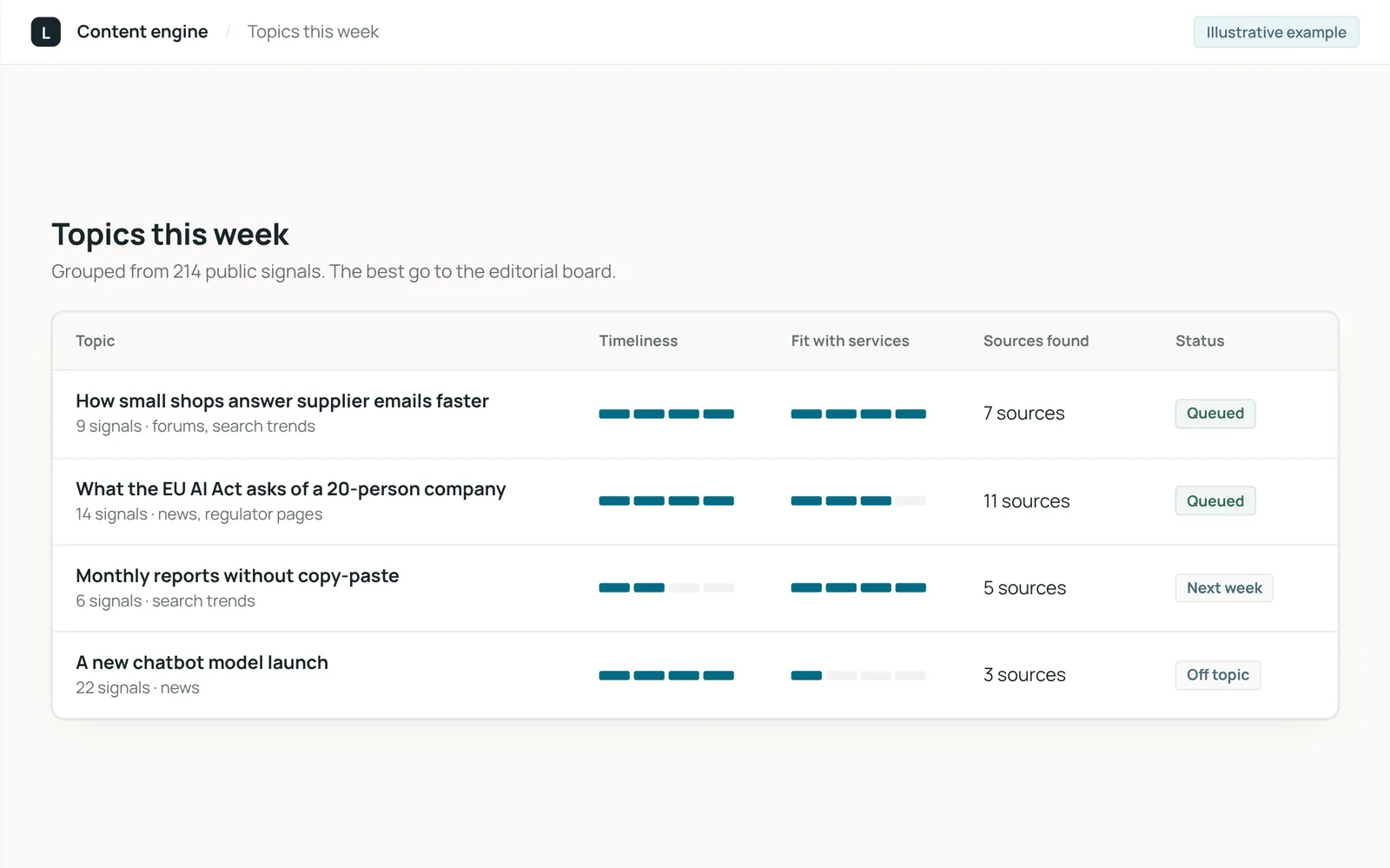
Topics found and scored
Every week the engine reads public news feeds, forums and search data, and groups related items into topics. Each topic is scored for timeliness, fit with the services the blog supports, search demand, available sources and overlap with what is already published. The best ones go to the editorial board.
Prepared by the system
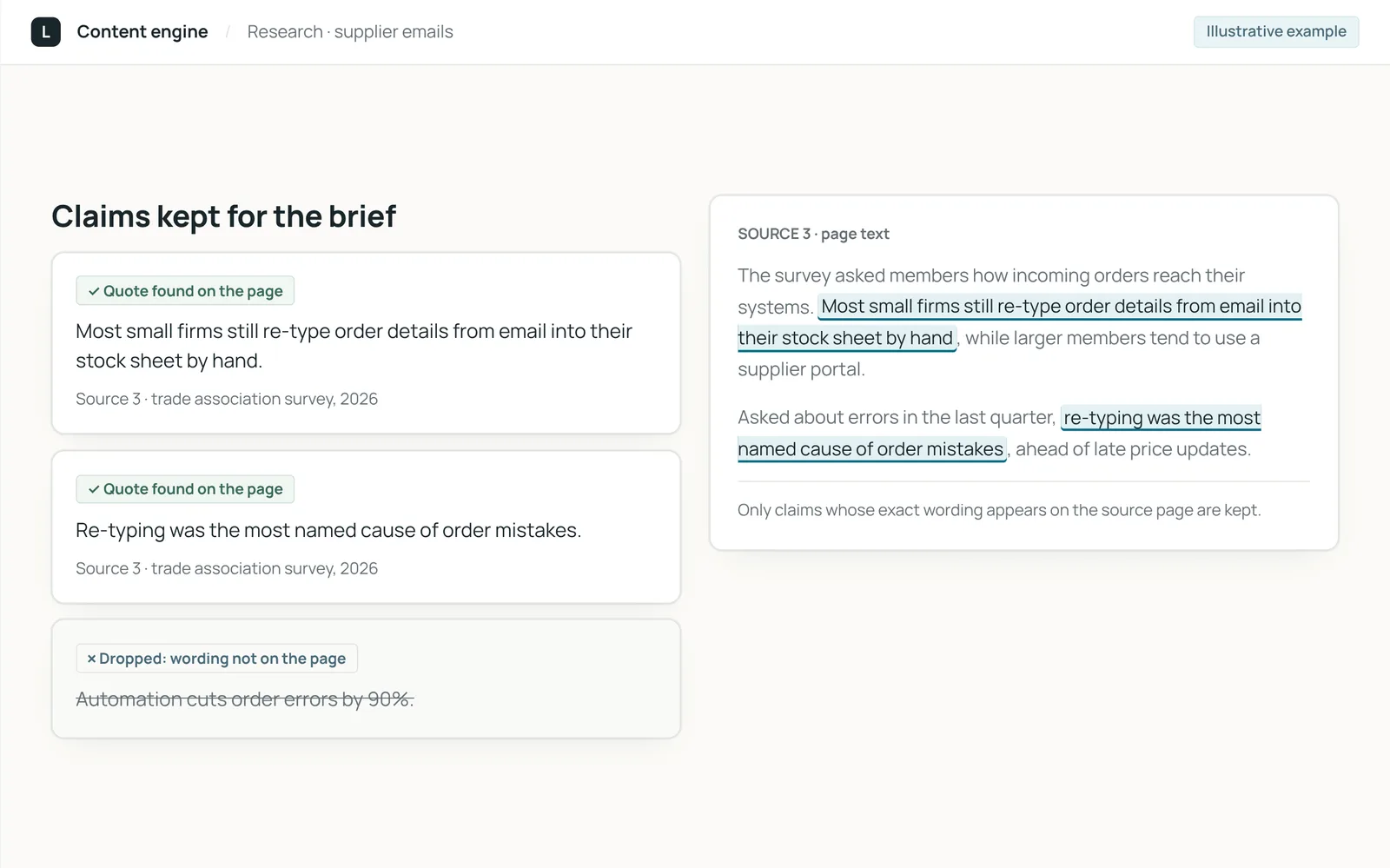
Research with checked quotes
The engine searches, reads the source pages and keeps a claim only if its quoted wording appears on the page. A claim it cannot find in its source is dropped, however useful it sounds.
Prepared by the system
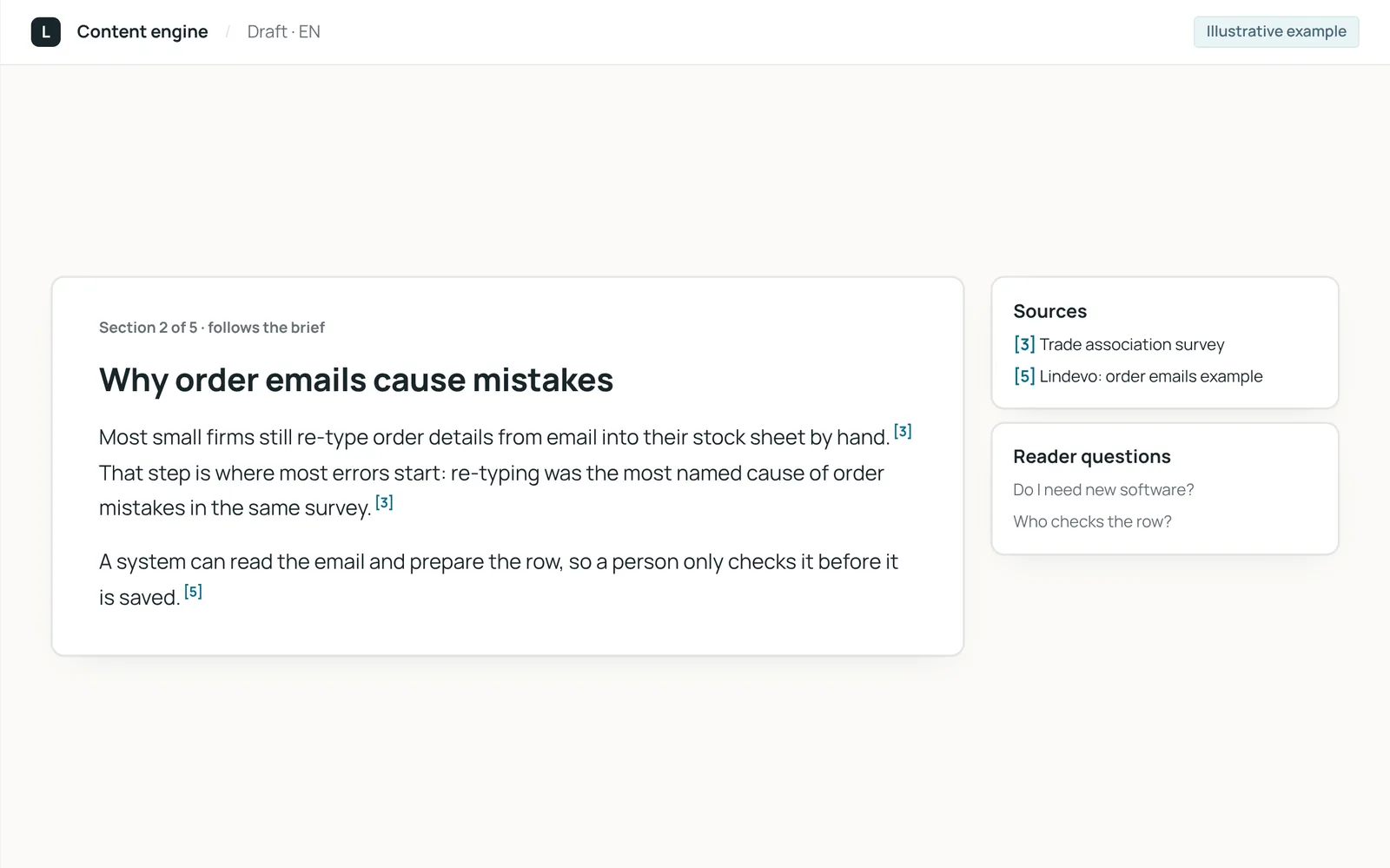
Brief and first draft
A brief with sections, sources and the reader's likely questions comes first. The draft follows it, and every factual sentence carries a marker that links to its source.
Prepared by the system
Checks and revisions
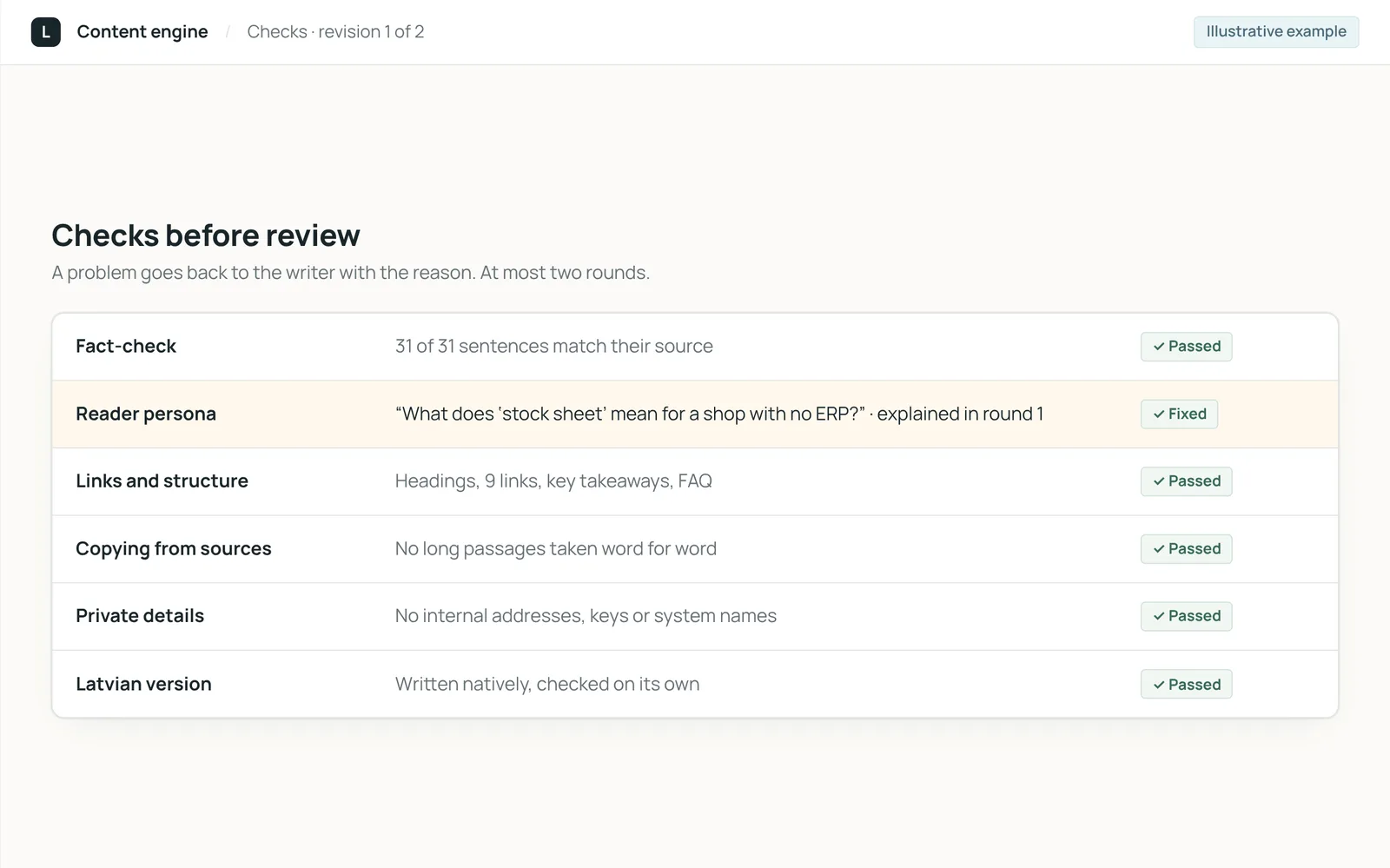
A second model checks each sentence against the evidence, a reader persona points out unclear parts, and code checks structure, links, wording and overlap with the sources. Problems go back for revision, at most twice. The Latvian version is written natively and checked on its own.
Checked by a person
A person reviews and approves
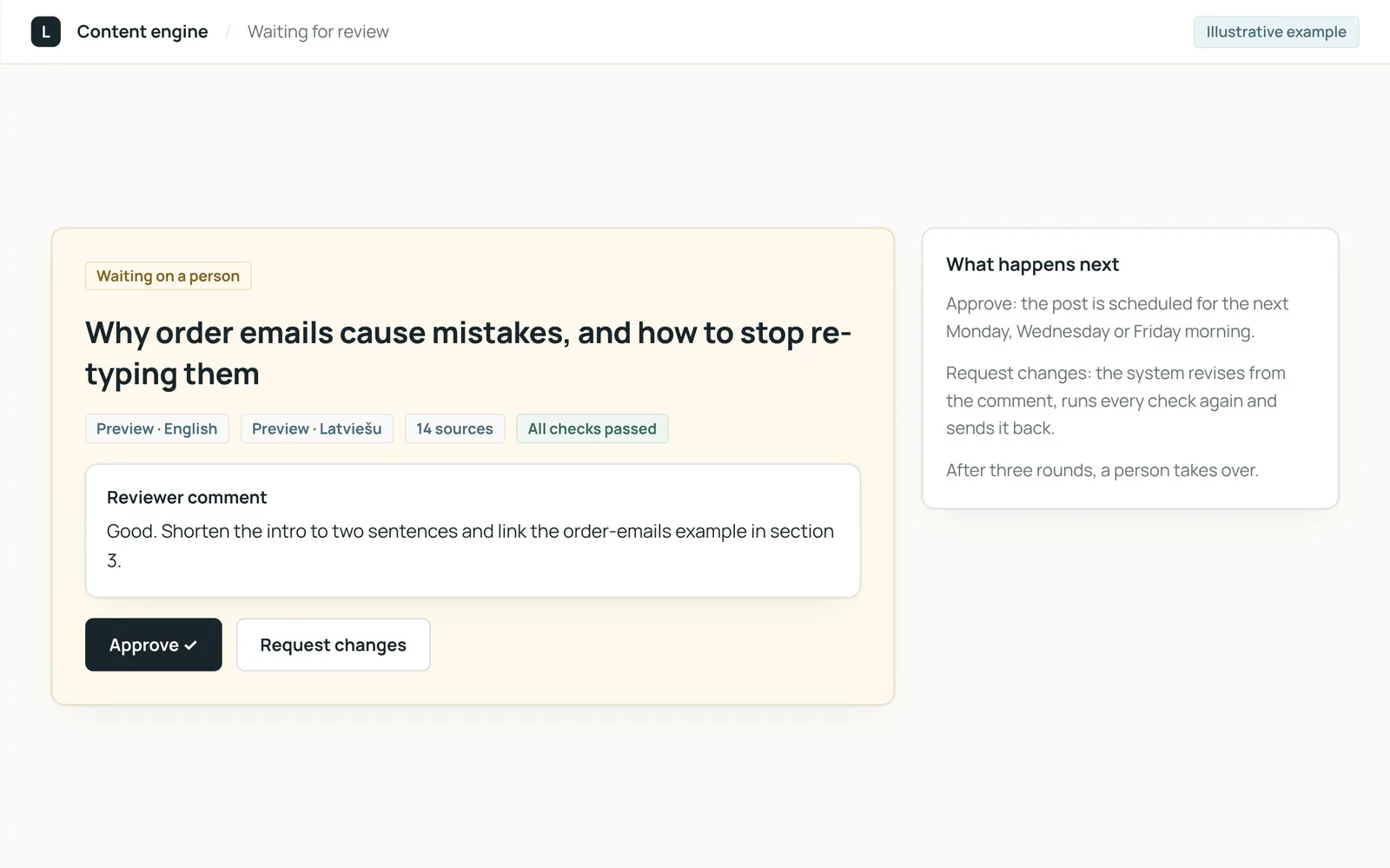
The reviewer reads both languages on private preview links, then approves the article or asks for changes in a comment. The engine revises from the comment, runs every check again and sends the article back.
Result
Published and measured
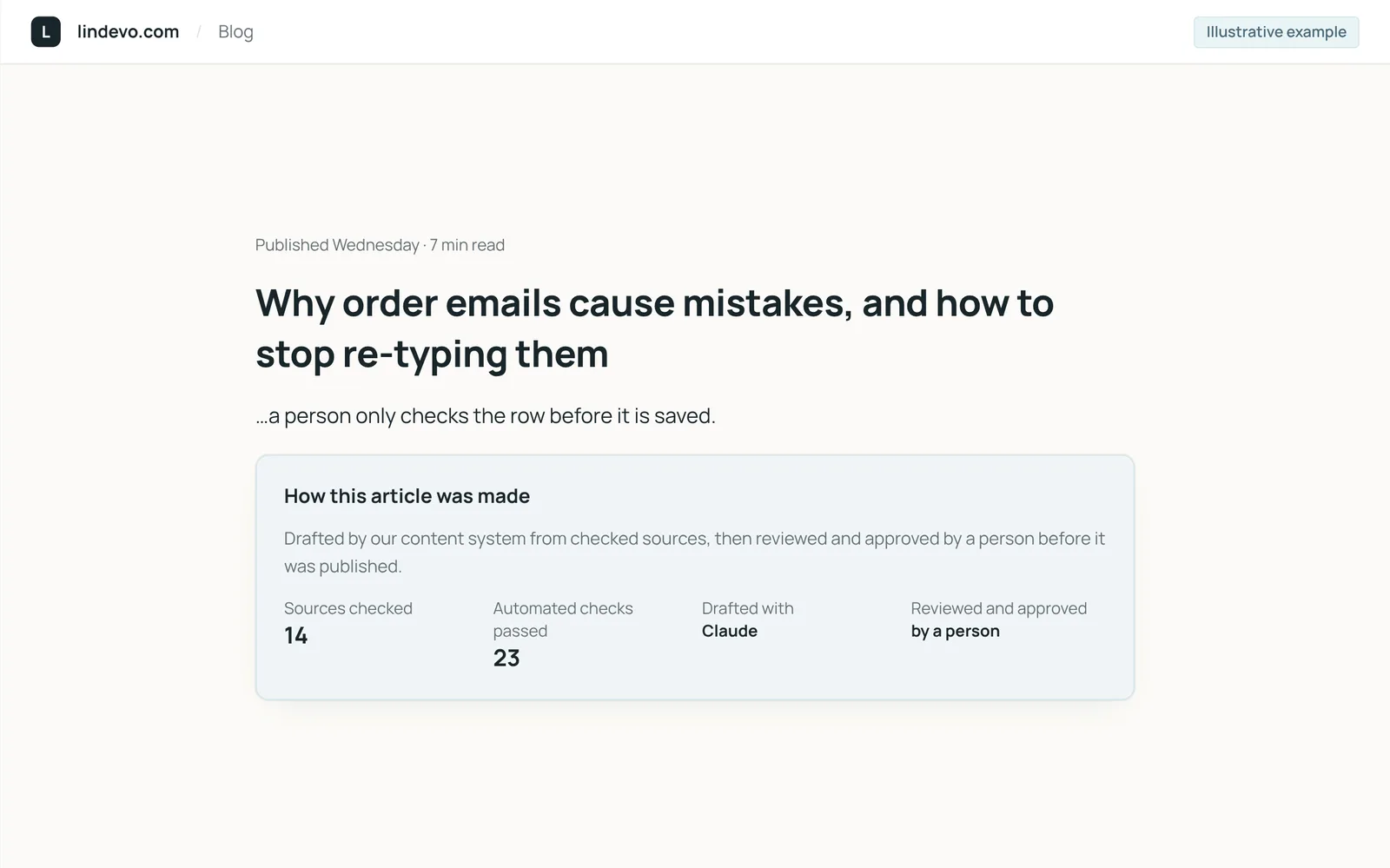
Approved articles are published on a set schedule. Each ends with a box listing its sources, checks, models and reviewer. Search rankings and mentions in AI answers are tracked afterwards and feed into the next week's topics.
A person approves every article
Nothing is published until a person has approved it. If the reviewer asks for changes, the engine revises the article from their comments, runs every check again and sends it back. After three rounds, or when a comment is unclear, the question goes to a person instead of another automatic attempt.
Before any text leaves our own systems, it is scanned for things that must never appear in public, such as internal addresses, keys and the names of private systems. A serious finding stops the article.
When the reviewer edits an article before approving it, the engine records what changed. Once a week it proposes short writing rules from those edits. A rule is used only after a test: a fixed set of sample briefs is written with and without it, and a separate model compares the results. If anything gets worse, the rule is dropped.
What it could do for your business
A content engine for your own blog. We set it up around your services, your sources and your languages, and tune the writing rules to your voice. Your team stays the reviewer: the engine prepares, and your expert approves. It suits companies that know their subject well but cannot spare the hours to write about it every week.
The same pattern for other repeat work. The engine is one example of what we build: software prepares the work from your own sources and checks it, and a person approves what goes out. The same structure works for quotes, recurring reports, product descriptions and replies to customer questions. Read how we build reliable AI workflows with human review, or start with how to choose your first AI automation.
What it does not do
- It does not publish anything a person has not approved.
- It does not invent figures, clients or quotes. Every number in an article comes from a cited source.
- It does not write about client results. When we write about our own builds, the text is checked so that no private details reach the page.
What the box at the end of each post means
Every article ends with a short provenance box. It lists how many sources the article cites, how many automatic checks it passed, which models helped prepare it, and who reviewed it and when. Code counts these numbers from the records the engine keeps for that article; no model writes them.
The box does not say the article is free of mistakes. It shows how the article was made, so a reader can judge how much weight to give it.
Frequently asked questions
Does a person really review every article?
Yes. Publishing is blocked until a person approves the article on a private preview. The engine can revise and re-check a draft on its own, but it cannot publish one.
Can it write in Latvian and other languages?
Yes. Our blog is published in English and Latvian. The Latvian version is written natively rather than translated word for word, and it goes through its own checks. Other languages can be added per project.
Does Google penalise AI-assisted content?
Google's guidance says it rewards helpful, reliable content however it is produced, and that using automation mainly to manipulate rankings breaks its spam policies. The engine is built for the first case: sourced, checked articles that a person approves. Read Google's guidance on AI-generated content.
Can you build one for our company?
Yes. We start with your topics, your sources and who on your team will review the articles, then set up the engine around them. Tell us about your blog and we will suggest a first step.
What happens when a check fails?
The draft goes back for revision with the reason, at most twice. If it still fails, or the reviewer's comments cannot be resolved after three rounds, the article stops and a person decides what to do.